University research · Product scoping
Confidential
A technology mapping platform for a research consortium: evolve a first version into an extended V2, with a complete UX/UI redesign and a governance model to rethink entirely.
The problem
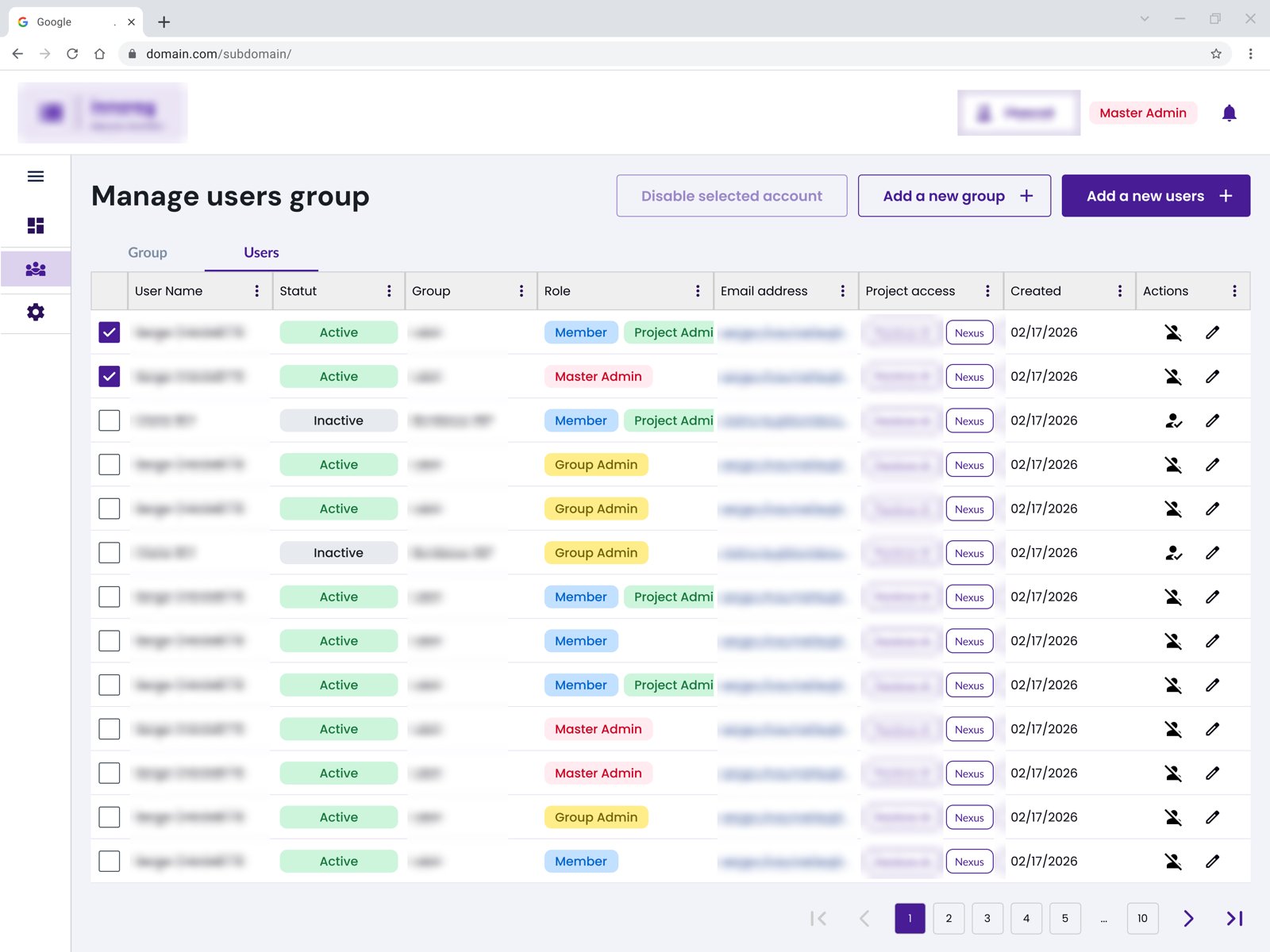
Access rights that differ by profile, action and object, to fit into a readable interface, while keeping a single, consistent reference for developers, QA and the product team.
The key decision
Model governance before the screen: a “can do / cannot do” matrix per profile, traced through to the user stories, rather than discovering it during development.
What changed
Journeys validated with real users, a controlled information architecture and a stable base for the V2.
Product OwnershipWorkshop facilitationWireframingMultilingual UXAI-assisted designFrom call for tenders to acceptance
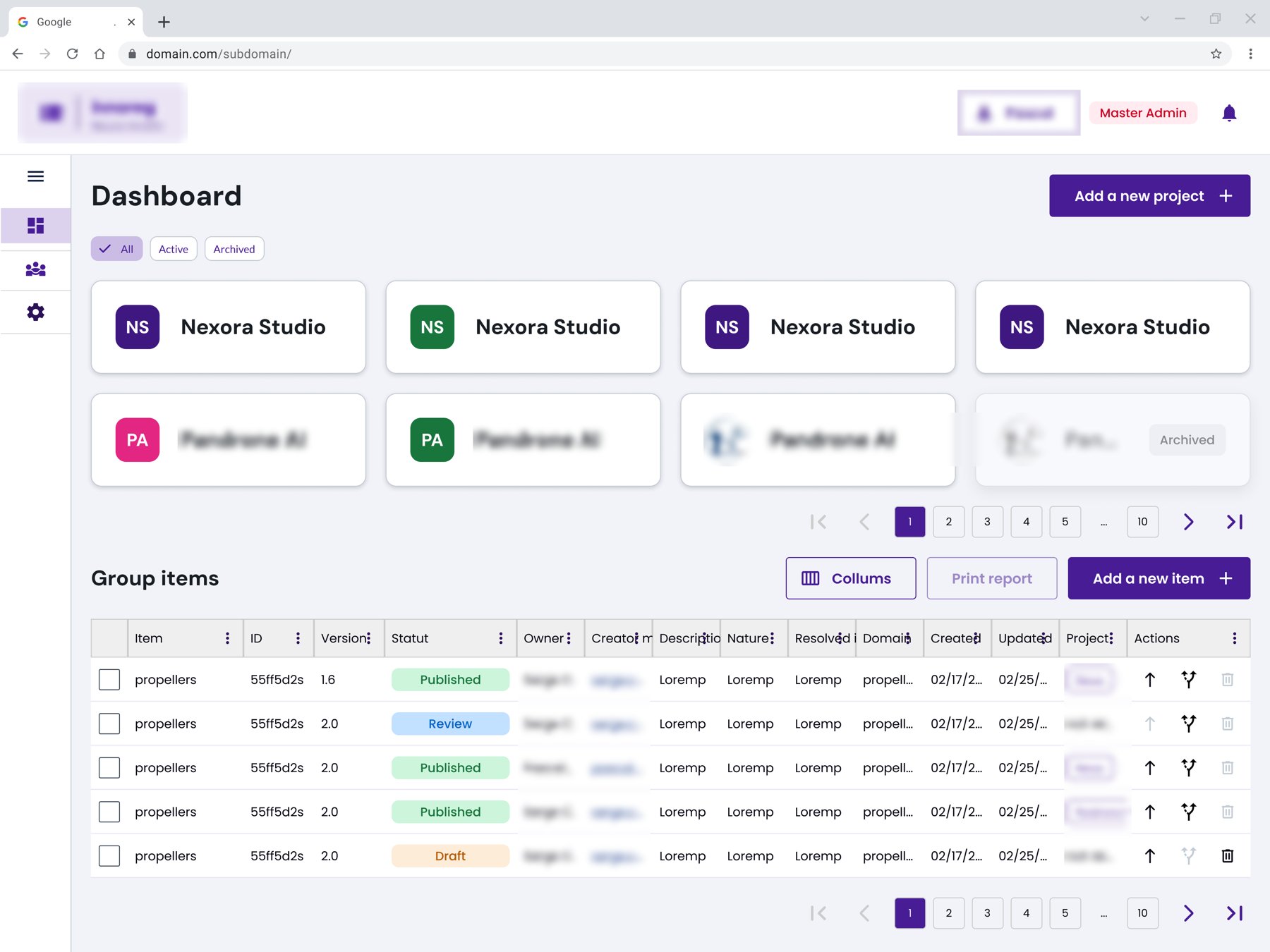
Before: V1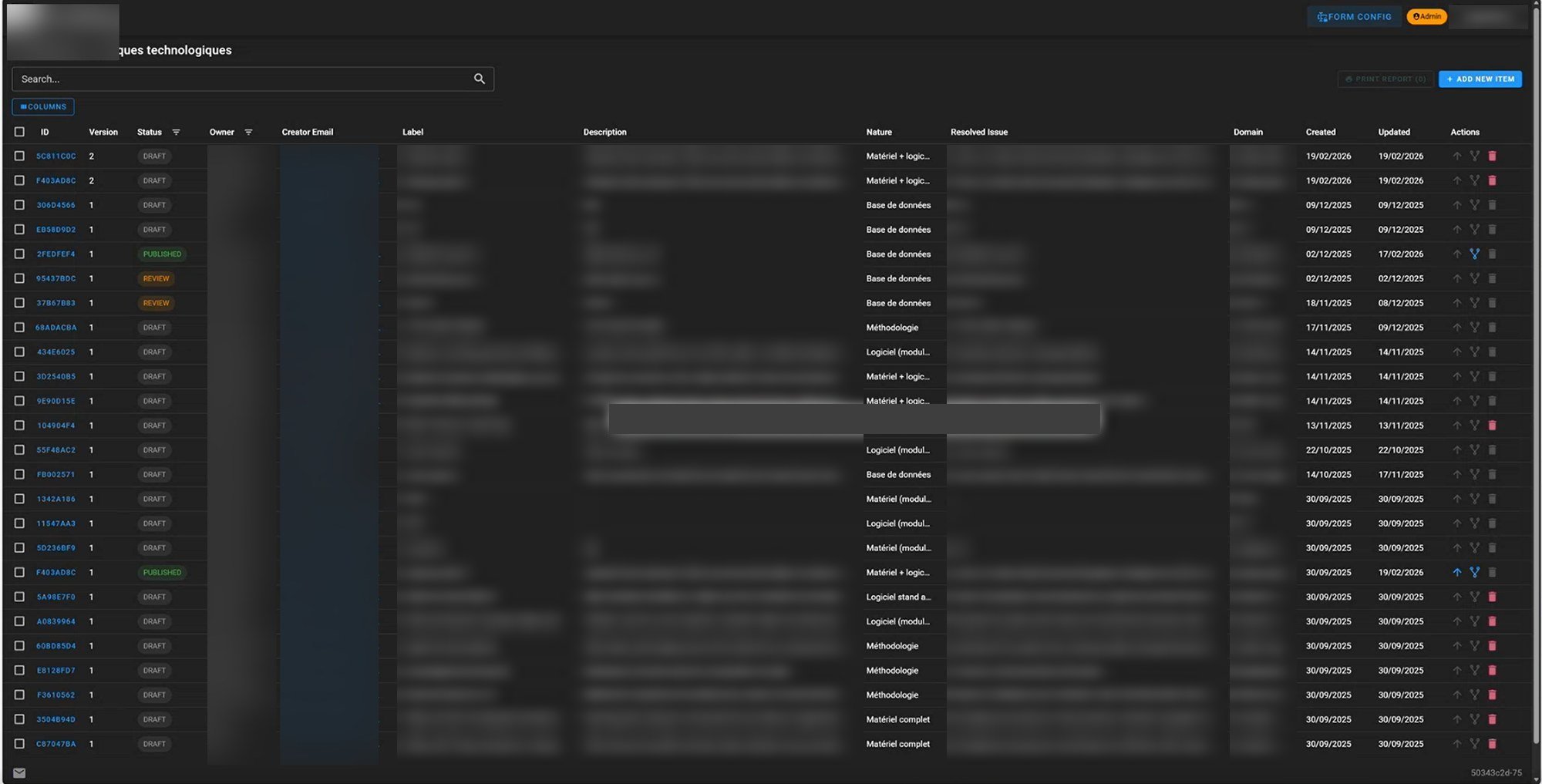
01 · Context and problem
Moving from a V1 to an extended V2
The project started from a public call for tenders that I wrote and mocked up; we won it directly, with no oral defence, with a client I have supported for a long time. I then led it from discovery through to acceptance testing.
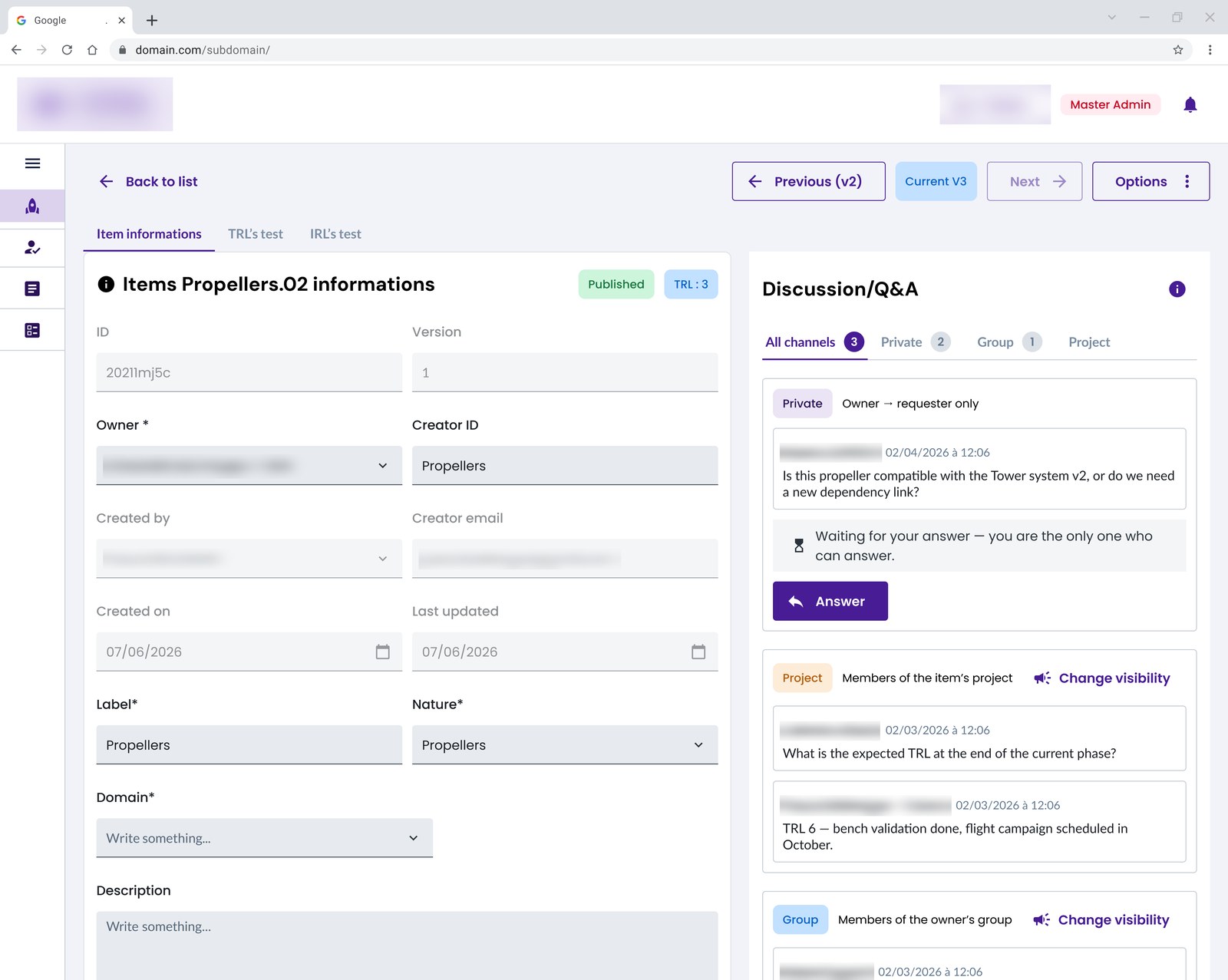
The platform maps the technology building blocks contributed by each partner of a research consortium, and assesses their maturity on shared scales. The V2 had to add multi-project management, the assembly of blocks into systems, an interactive map and assessment journeys.
Three challenges: complex governance, with rights that differ by action and object; a single reference to keep consistent for developers, QA and the product team; an interface entirely in English, while project documentation stays in French.
A complex information architecture, yet under control.
(the key decision)
02 · Approach
Scoping with the people who use the tool
- Scoping workshops to clarify scope, journeys and rights per profile.
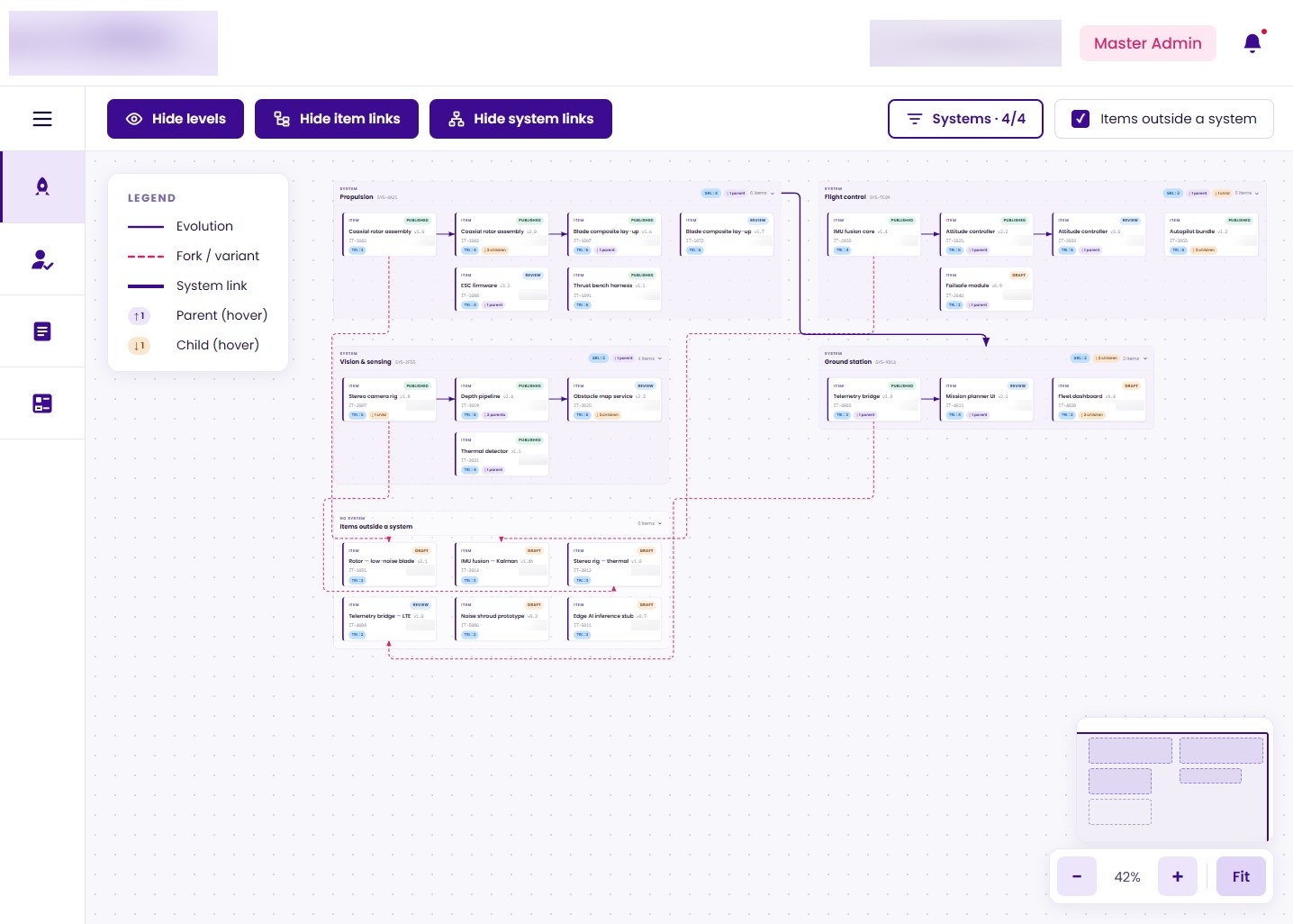
- A map co-built with the developers, based on the “node graph” approach of visual editors, with the Vue Flow library.
- Interactive HTML prototypes tested with people who were also users.
- Specification workshops to settle governance, formalised in “can do / cannot do” matrices.
- Iterative construction of rights and notifications, with traceability to the user stories.
Architecture validation workshop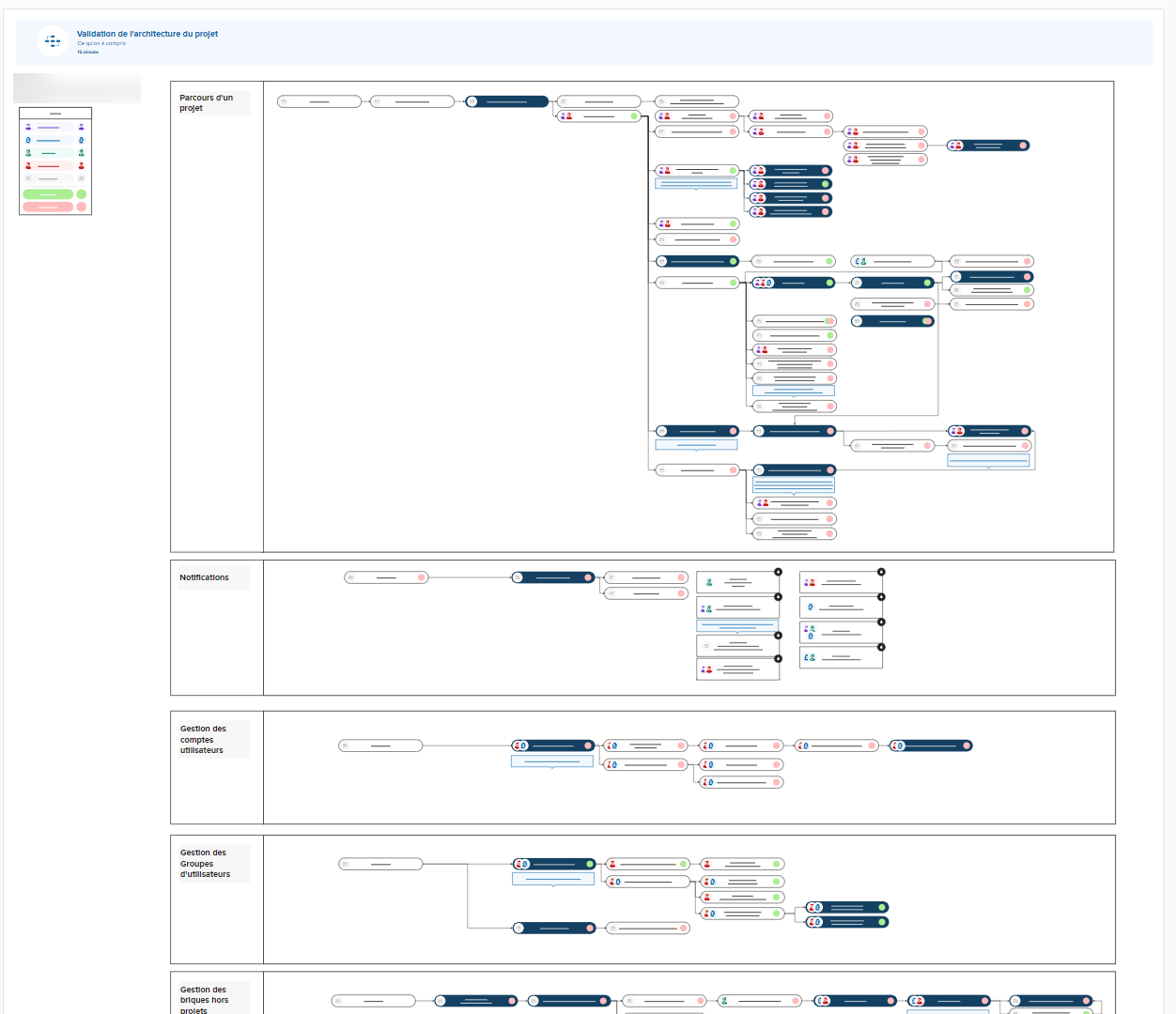
03 · Solution
A complete redesign, readable internationally
- Complete UX/UI redesign, with a more intuitive journey and a coherent visual identity.
- Interactive node-graph map, built with Vue Flow, with a detail panel and a mini-map.
- Assessment scales and data configuration.
- Interface entirely in English for an international consortium, with project documentation and exchanges in French.
01 · Call for tenders
Answer written and mocked up by me, won directly, with no oral defence.
02 · Discovery
5 weeks of scoping with users.
03 · Development
3 sprints, with the development team.
04 · Acceptance
The V2 is currently in acceptance testing.
Leading a project end to end with AI.
(from discovery to delivery)04 · Results
Tender → V2
from a public call for tenders won to a V2 in acceptance testing
EN
interface entirely in English, for an international consortium
5 + 3
weeks of discovery, then development sprints
Journeys and rights matrix validated with contacts who were both sponsors and users. HTML prototypes helped validate the direction before any development. Reliable user stories, with aligned acceptance criteria, for fewer back-and-forths in sprint.
05 · Takeaways
AI as a partner, from discovery to delivery
A project led end to end with Claude, which I've used daily since April, with a notable efficiency gain.
A shift in posture
Working with developers who use Claude Code themselves changes the posture, not only the tool.
Co-building with developers
The interactive map was co-built with the developers, with Vue Flow.