Health and social care · Application redesign · SaaS
Confidential
Complete redesign of a web app used by health and social care professionals to track the health, autonomy and mental health of the people they support.
The problem
A rich but heavy tool, with menu- and form-based navigation poorly suited to professionals on the move and under pressure.
The key decision
A continuous design sprint and strict prioritisation: each feature is scoped with users, tested if needed, then arbitrated with developers.
What changed
More than 70 screens redesigned, 49 sprints, a product ready for commercialisation.
Design sprintInteractive prototypingAI assistantRegulatory compliance
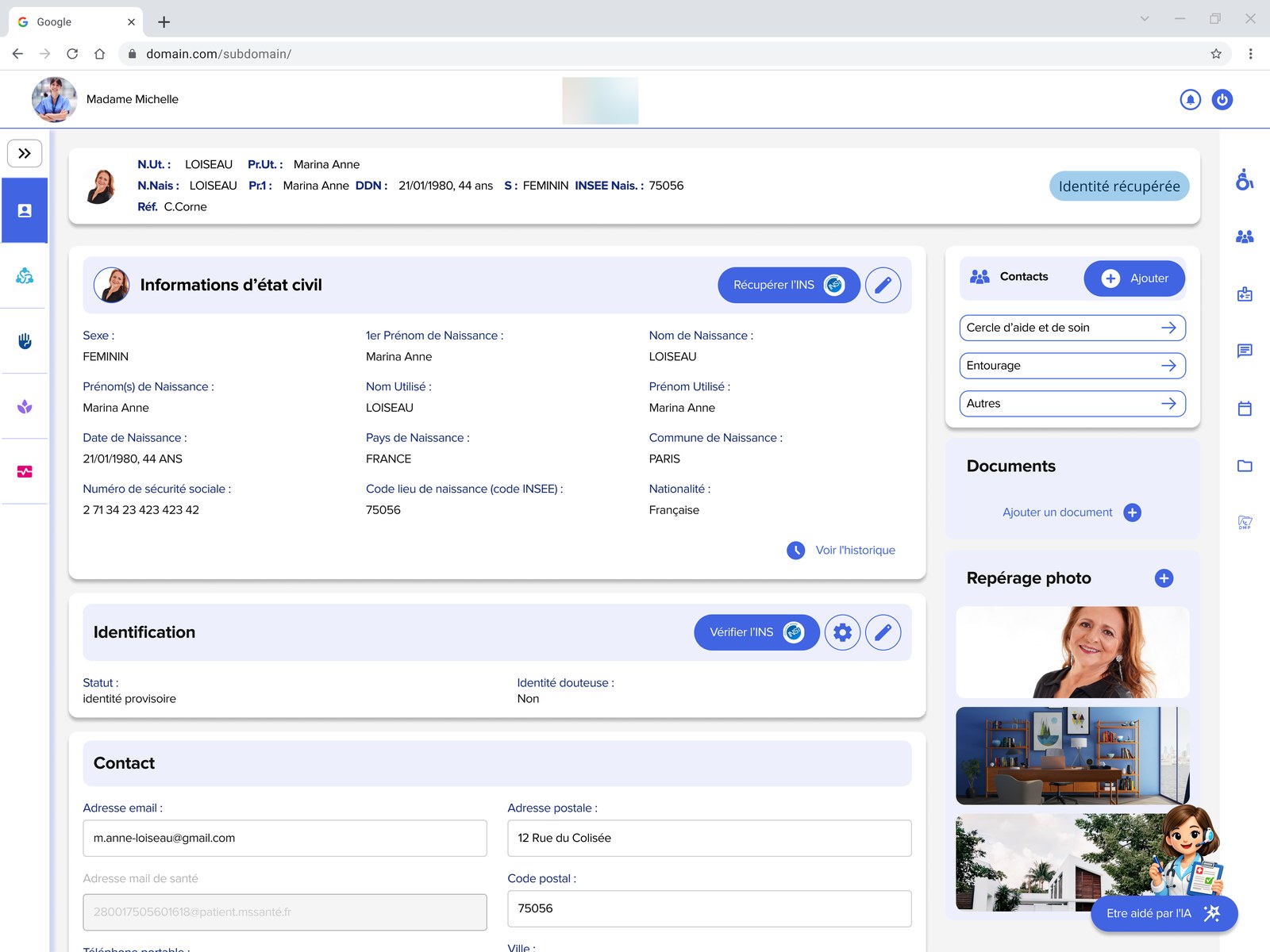
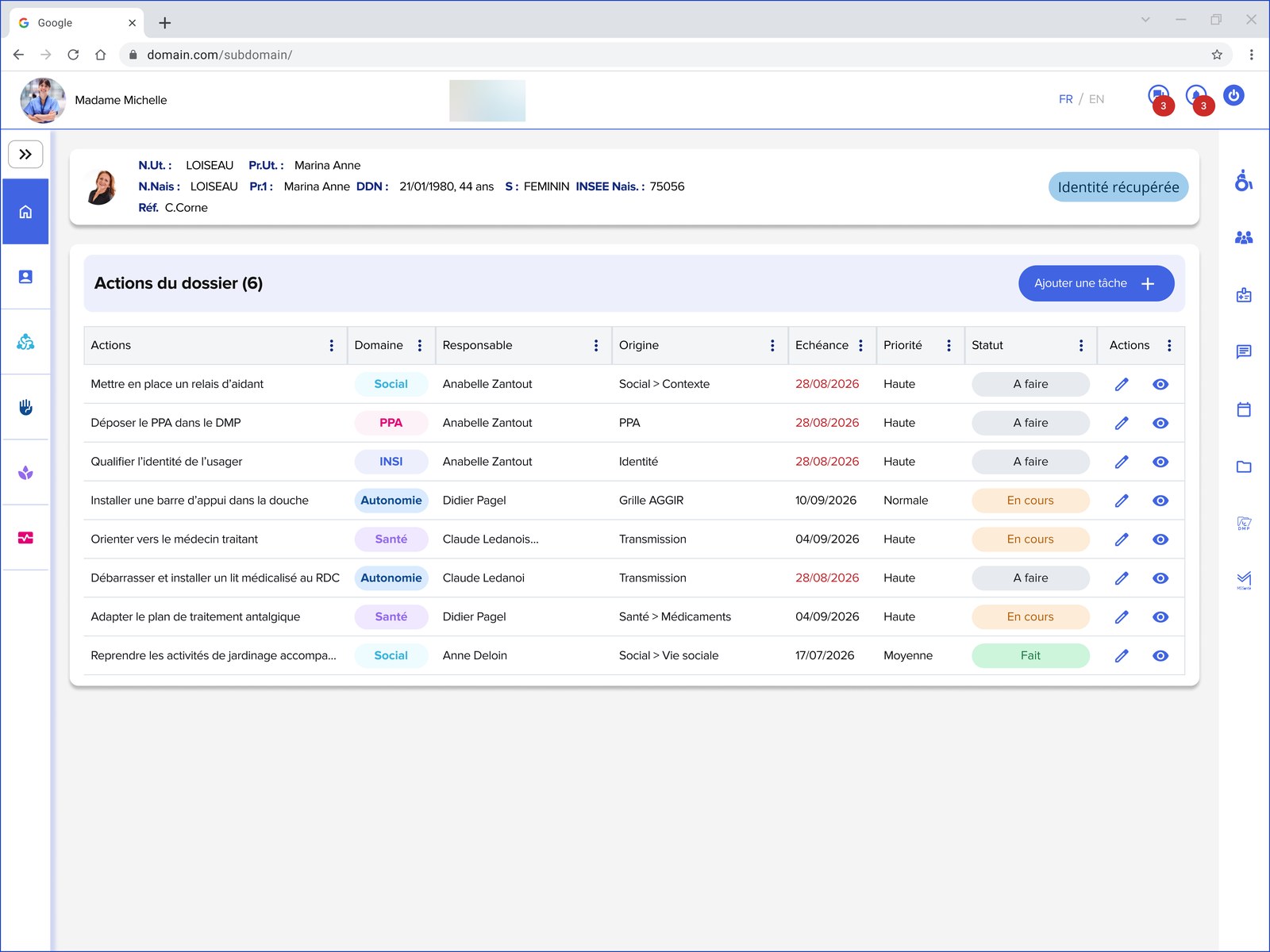
Before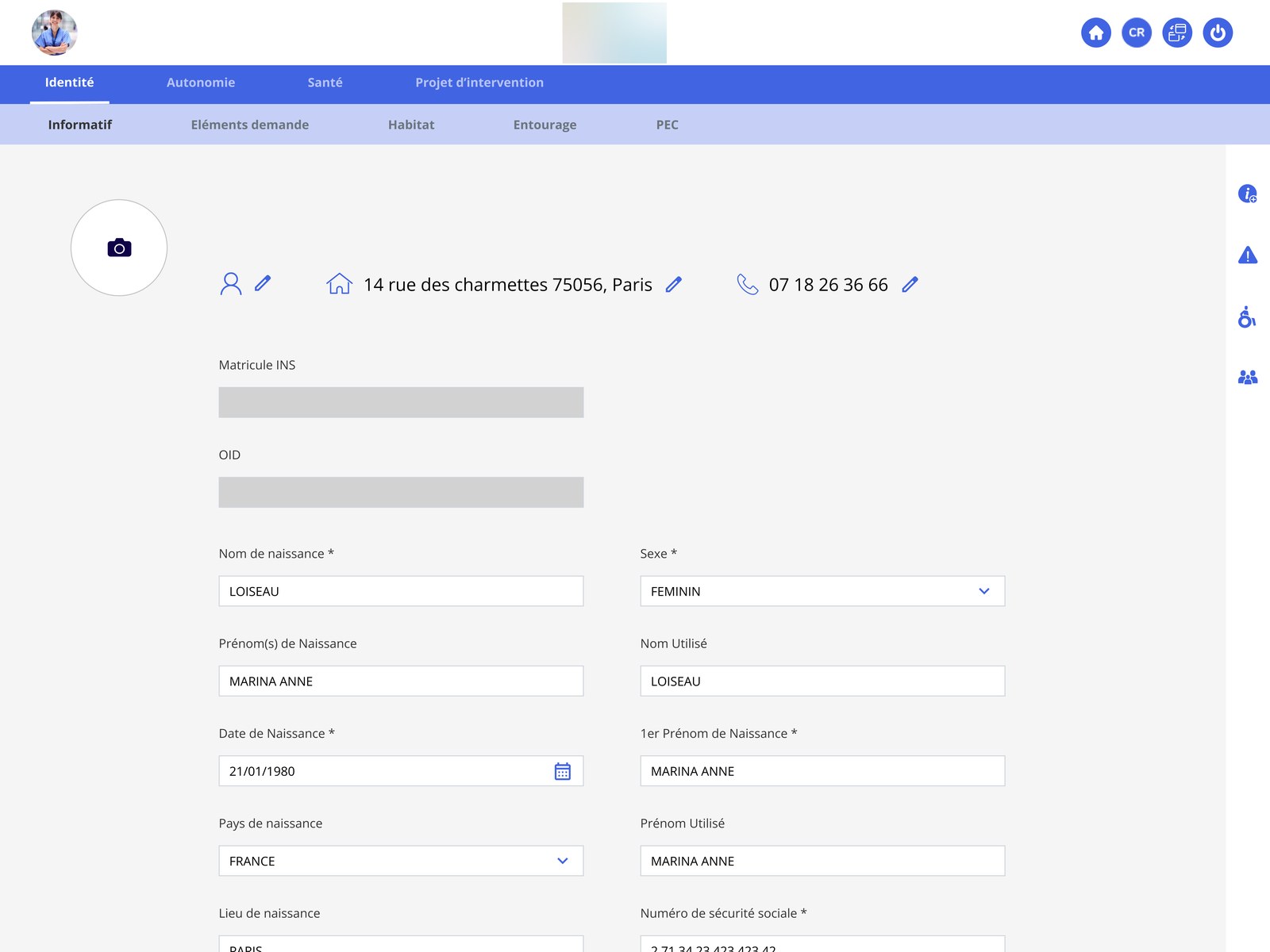
01 · Context and problem
A solid base, a heavy experience
The existing application was functionally rich, with quality structured data and about 3,500 active files. But its use remained administrative: menus, sub-menus, forms.
Its users are agency managers, home-care aides in the field, nurses and advanced practice nurses. Often on the move, under time pressure, with very varied profiles and rights. The ambition: make it a reference product that can be marketed in the health and social care sector.
Prioritising also means choosing what we don't do.
(the key decision)
02 · Approach
A design sprint, repeated for each feature
- An idea comes up from the client or users.
- A workshop or a user interview scopes the need.
- A design iteration answers that need.
- A user test, if needed, validates the proposal.
- A trade-off with the development team decides feasibility.
- The feature is developed in a sprint.
Cycle repeated 49 times since the project started.
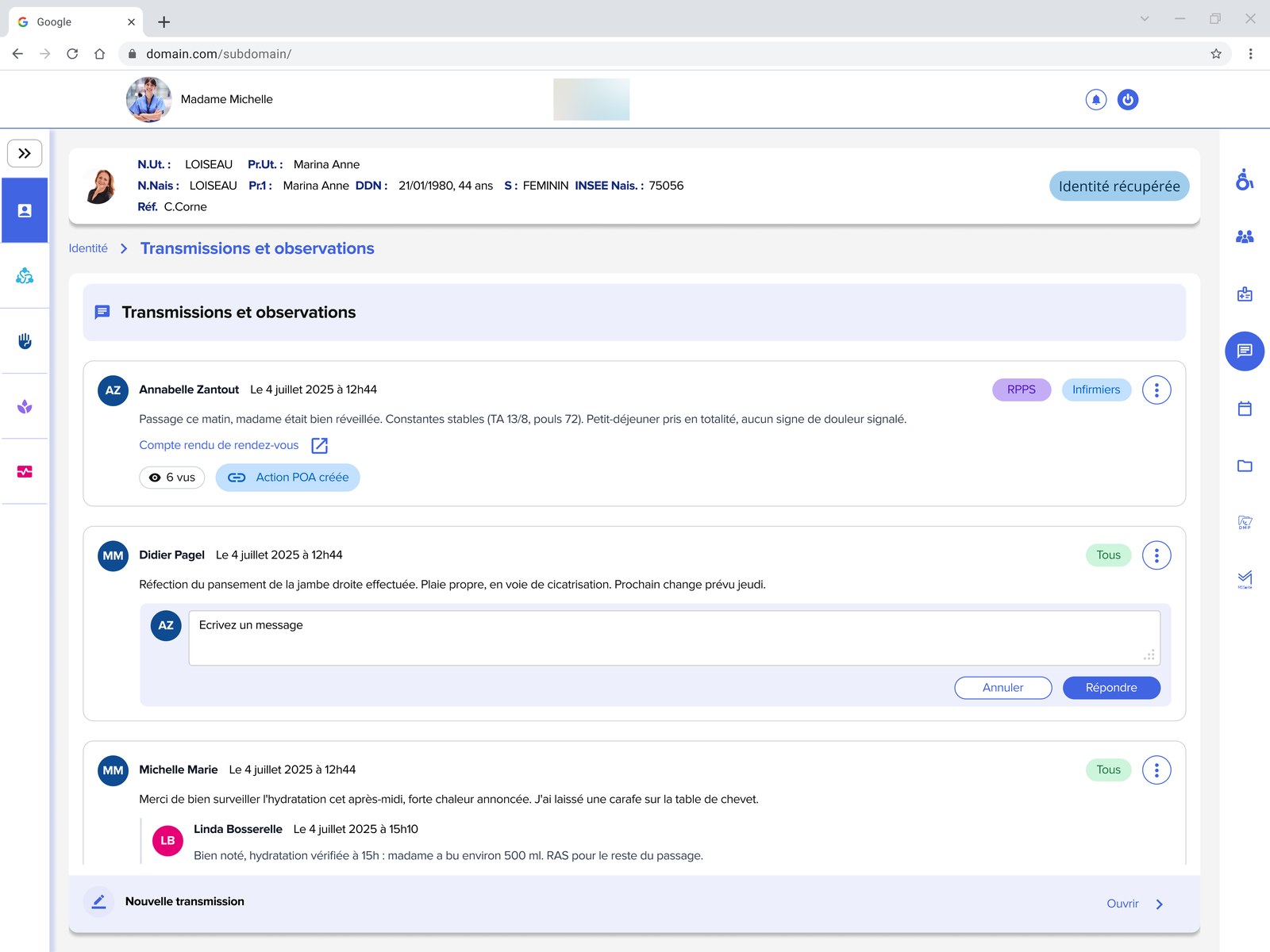
03 · Solution
The whole application, designed for the field
- Redesign of the entire application, with more than 70 screens.
- New key business features: handovers between professionals, a personalised care plan (PPA), a first for the sector since no HAS reference framework existed yet for this kind of tool.
- Regulatory compliance under way: Ségur, Pro Santé Connect, the national health record, HAS, GDPR, AI Act.
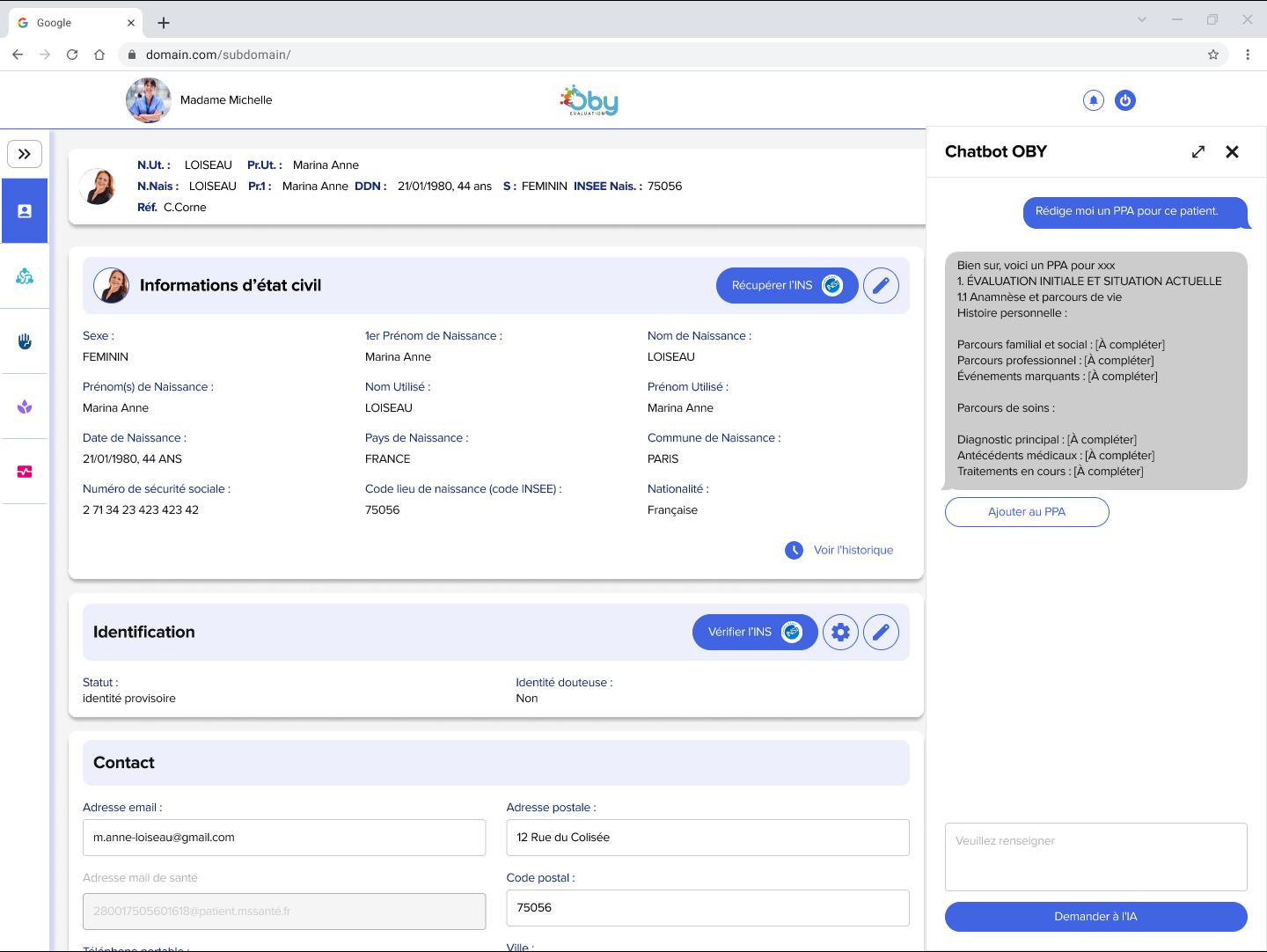
- A contextual AI assistant built into the journeys, designed with the AI team and our technical AI partner: I handled the visual side and the UX/UI journeys. The client took the bet of relying on AI to build the care plan, which the assistant generates directly from a plain-language request, ready to review and complete.
04 · A problem we hit
An honest miss, on the action-plan form
Over a certain period, the client became reluctant to involve users in our workshops: rarely available, they often cancelled. The one time we did work on the action-plan form with them, the result didn't convince them: we ended up with a long, unintuitive version, trying to cover every case rather than the essentials — an action plan first needs to be relevant and quick to fill in to be usable by every profile.
For lack of time, we built and shipped it as it was. No one used it. The form rested on no existing HAS framework: we had no solid ground to stand on, which made the mistake easier to make. Another signal I should have read better: the users involved didn't dare contradict a version designed by the head of the company, which skewed their feedback — I should have flagged that far earlier. I took a concrete lesson from it: assert my choices more, scope the need better upfront, and not hesitate to raise the alarm when needed. A few months later, I proposed a redesign of the form that did convince.
After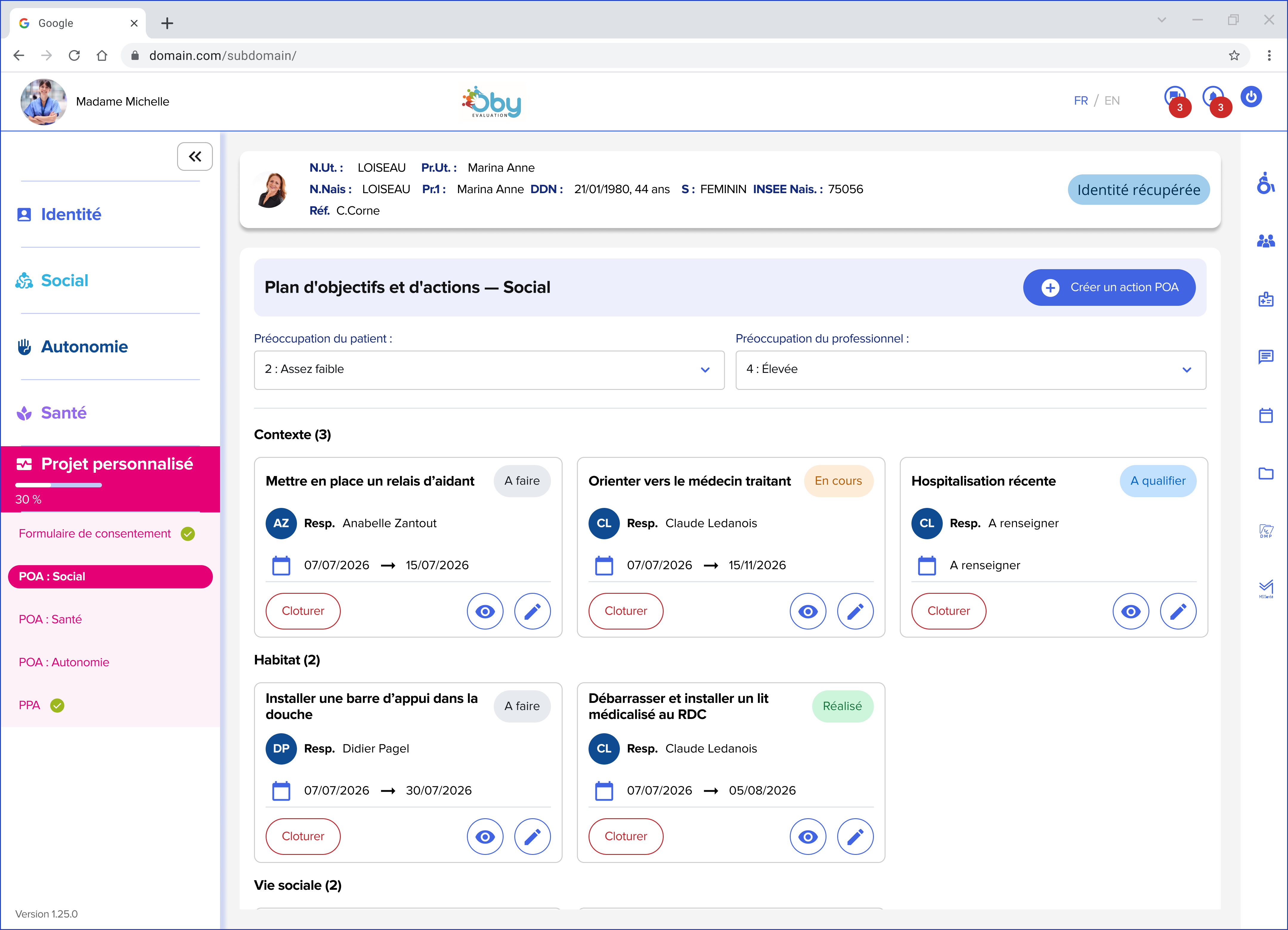
The same cycle, 49 times.
(the method)05 · Results
70+
screens really redesigned since 2024
49
agile development sprints so far
SaaS
a product ready for commercialisation
This work on the care plan added extra business value: presented to the HAS, it was praised in the absence of any pre-existing framework for this kind of feature.
06 · Takeaways
A client who is a “gold mine of ideas”
The client strongly challenged the team, and some drift occurred. Without strict prioritisation, the scope would have meant three more years of development before the SaaS mode could be marketed.
A strict framework, held together
As a team, we learned to set a strict framework and stick to it.
Reconciling three realities
The wishes of the head of the company, the reality of the field for users, and business constraints: the work is holding them together.